Psychologytoday is a crappy magazine that simplifies everything by having the answers to everything; the newest way to de with trauma. What makes a healthy relationship. Like self help books.
The most helpful thing I’ve found for clients to learn about what they’re grappling with is to find it out their way. No two people find things out the same way or look for the same answers. It’s common for clients I have to google narcissism and borderline personality disorder because a lot of them have been abused by people with those characteristics. Or symptoms. Whatever you want to call it. There’s a book called Walking on Eggshells about having relationships with different kinds of abusive people. I’ve been there. Afraid of calling someone who is supposed to be my best friend. Afraid of the next bad thing I’m told I’ve done and believe I’ve done.
I haven’t read the book but I’ve recommended it to some clients and it’s helped them. They also use it as a stepping stone to find articles and podcasts. Then they come back and process with me. I have discovered some traumas I haven’t read about or heard of except from clients’ experiences. Sleep trauma/abuse. When you’re partner comes home drunk and wakes you up from a deep sleep in the middle of the night and forces you to have a long emotional conversation for them when you’re half conscious. This person knows when you went to bed and how many hours left you have to sleep before you have to wake up and be really well rested. The person doesn’t care. They do it all the time. You’re unconscious and have not consented to being woken up and yelled at or forced into whatever your abuser wants from you. It’s part of why people take “so long” to get out of these relationships. Sleep is one of the most important things for mental health and functioning. Having your sleep interrupted on a regular basis causes you to barely have energy to deal with your day. It wears you down. When someone is unconscious and you purposefully wake them up for your constant crisis they are stealing from you your ability to live day to day like everyone else. There are all kinds of other aspects of trauma that aren’t in books. I discovered people who have had “noise trauma”. Growing up with a parent talking at them constantly and the tv being on in the background. I could explain it more.
It’s also having fights you’re told you started and that you’re manipulating the person so you feel guilty and talk to friends about what bad things you’ve done and they’re completely perplexed or they realize someone is fucking with you in one of the worst ways.
Anyway after one of my best friends killed herself I did the thing some people do where you try to figure it out; you want the answer and you don’t know how to get it but you obsess over it, read books. There’s Night Falls Fast by Kay Jameson, non fiction research book about suicide I never finished. Then I read a book by an older sister trying to find out why her sister she wasn’t close to killed herself. I don’t remember much of it but it was full of the research she’d done asking people close to her and experts.
I remember towards the end she talked to her sister’s therapist and he was torn over the fact that he’d never asked her one question. He was tied to his belief that if he’d asked her that question I guess she wouldn’t have killed herself. “What are you afraid of?” I’m sure he must have explained it and I could find the book and read that part. It seemed to make some sense for that situation but the book ends as all these quests end. There is no answer. I read a book called “Stay” during that time; I vaguely remember it was about the should I stay or should I go, but not the song, the question about sticking around despite wanting everything to stop and to get rid of the pain a final time. I can’t remember the book.
I’ve asked people what they’re afraid of. Sometimes the question was the right question to somehow open something up for the person. But a lot of the time the question is for people with anxiety and panic, not suicidal people. Sometimes people simply say they’re not afraid and explain what’s really going on for them. Maybe this question was only for that girl with that therapist. He didn’t sound like he thought it was The Question that cracks open things for everyone. Just her.
The first question in the article was, “Do you feel like yourself?” I didn’t read the article but I know from other sources of learning that asking people how they feel/felt about anything is like asking why. How do you feel about that is the cliché therapist question everyone thinks of. It’s even often annoying. Once in a while it’s appropriate but I learned from a lecture that this question can cause the client to feel like they have to give you, come up with a feeling and many don’t have an answer and think they’re supposed to. What was that like for you is a question that people can answer or say I’m not sure, as the answer could be anything. Many traumatized people don’t like having feelings and it’s a coping tool for them. When they’re ready to feel something it’s often from an exploration the therapist had no idea would open up a feeling. According to this therapist whom I agreed with about feelings questions said the best intervention is silence. Then later he said he’s told clients sometimes I talk too much so please tell me to stop talking when that happens. Both are true. Complete silence can be terrible in a session with a traumatized client as they feel alone and abandoned. Other times you know you need to shut up and listen.
There are some wrong questions like Why did you do that and others but most of the time you have to go with knowing your client and even knowing that every session will be different and you’re listening for something but you don’t know it until you’ve been told.
Everyone says the wrong thing sometimes or takes risks. A mother of two was deeply affected by Tuesday’s school shooting. I answered her experience. The best part of her day was her kids coming home from school. I said, “I know. It’s horrible and makes you want to follow your child everywhere all the time even though you can’t.” She knows I’m a mom. It isn’t the right thing to say to anyone in particular but for her it was and she said Yes, and continued. I didn’t plan that or think about it too hard but I did listen to my instincts. It wasn’t an impulsive intervention. It was the right one at that moment that validated her experience and helped her feel less alone with it.
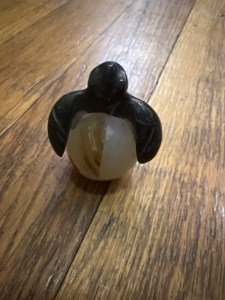
Maybe a lot of times it’s simply to be with your client in their experience so they are not alone. When I had my child I went to therapy every week with her. She was an infant. The therapy was reassurance that I was a good mom. I needed a witness who wasn’t anyone else. It needed to be him. I started therapy with him when I was pregnant. Before I went to have my baby I saw a little porcelain egg with a turtle coming out of it. The next week he gave me one. Was it his or did he have another one? I don’t remember.

 6 Impossible Things For Breakfast
Loved this. Thanks for posting it
LikeLike