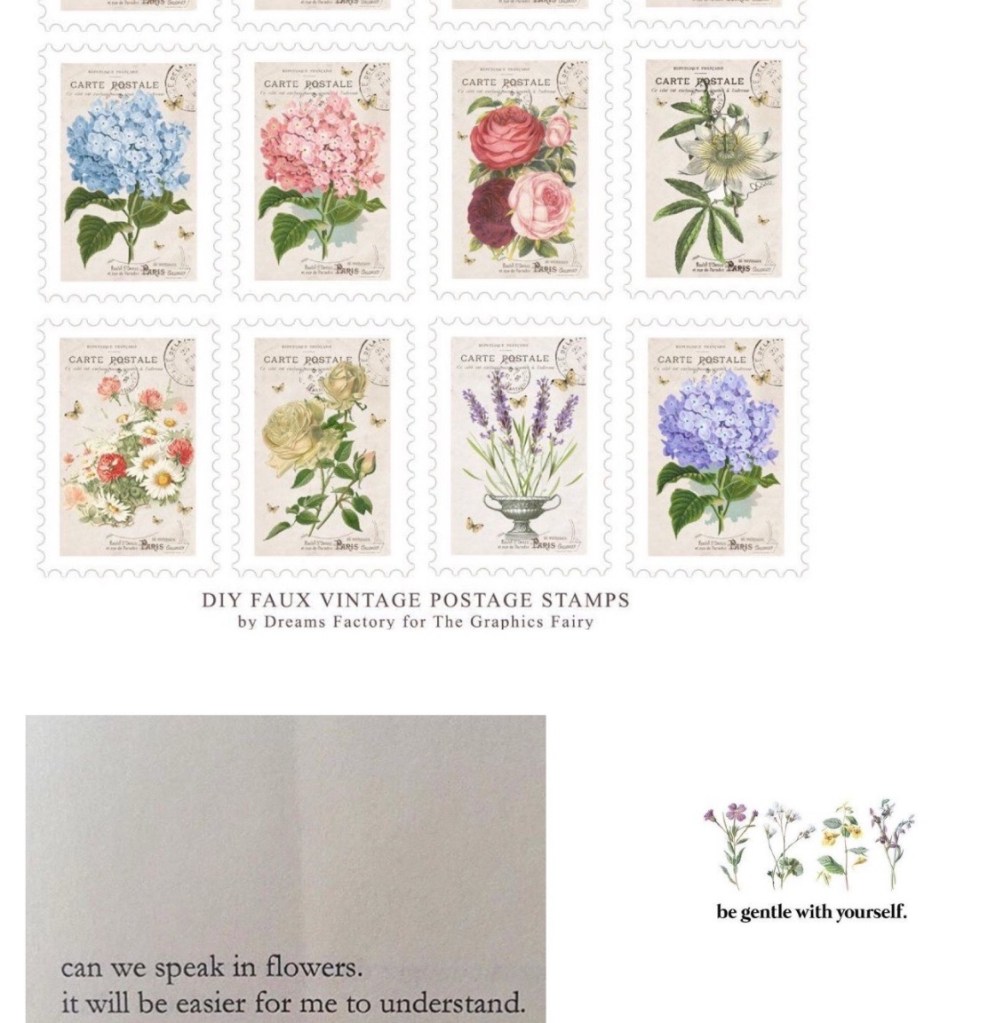
A good thing to look at. Good night…
I’m pretty sure a bunch of things are causing me to feel like I’m losing my mind(s). The Harvard Red Book didn’t help. I can’t watch the hurricanes. I have a client who safely escaped with her family. We had a session today about all kinds of other things. We both have similar type unquiet minds in some ways but of course I don’t cross the line with her. I’ve got clients in all kinds of states. Luckily tomorrow I only have one. Maybe I’ll be physically better on Friday.
It’s weird to be physically sick and mentally sick at the same time. I’m in charge and used to this stuff part PTSD from all kinds of things that triggers my mind.
I’m just assuming this is a secret place my clients won’t find.
Studios I’ve Had
If I’d had today’s technology back then, you would be able to see exactly what my first studio looked like. You’d see the paints I had, the friends who modeled for me, and the entire process of making those specific paintings. You might have even gotten a tour of the apartment and seen me at that age. You’d be able to witness the strange things that happened while I lived there, all the drawings I made, and the work I was creating—so different from what I do now. There would be so much to look back on that I don’t have.
But all I have are the memories, and that’s the point. I wish I could see all those other things, but I can’t. So, I’ll tell you the memories I do have from living there.
The first art studio I had was right after I graduated from Harvard, in the summer of 1991. It was on Rue Goethe—like the poet—where my parents had a rental apartment, provided through my dad’s law firm while he was working in Paris. I lived there for the summer until I found a place of my own. The building had a tiny garret at the top, a space meant for the “maid” in old times. It was very small, about the size of what my current studio will be, but in a different shape. I managed to set up an easel, have friends pose as models, and find room for all my oil paints and brushes. It had a skylight window that was slanted as it was in the roof.
The space was sparse, but it felt exciting. It was my first real studio, and I had people posing nude, which made me feel like one of those classic Parisian artists from a different era. I imagined myself as part of that bohemian world of artists and writers who came to Paris to work and spend their days in cafés, reading each other’s books and paintings. Ok, Chat GPT you didn’t get that idea. It reminded me of those times but I didn’t imagine myself as one of those people. Back then I didn’t have a lot of self-esteem, but discovering I was an artist randomly a few years before, I liked the artist I was and the ideas I had.
So, that was my first studio. It feels incredibly romantic to remember, especially when I think about how supportive my parents were of my art back then—just as they still are now, with my work hanging all over their apartment.
What I meant there is a rare privilege that doesn’t just come with them being “patrons” of me as an artist, extremely rare, but also they hung my paintings on their walls everywhere, from the first still life I made at Harvard, of which I do have a photo.
After Paris, I had this grand idea of moving to Czechoslovakia— ( I had the grand idea when leaving Harvard of living in Paris as a stepping stone to moving to what was then Czechoslovakia back when it was still called that—because I’d romanticized it through reading Milan Kundera’s books. I was captivated by the idea of living there.
Here’s what I loved about Teresa and how she reminded me of myself:
“She loved to walk down the street with a book under her arm. It had the same significance for her as an elegant cane for the dandy a century ago. It differentiated her from others.”
I loved Milan Kundera back then. I knew the book and film The UnbearableLightness of Being inside out. An odd synchronicity is his idea of sharing dictionaries in love people, I’m using it as a phrase to mean people in love who have the start of a history within something already shared. My kid asked if I believe in soul mates. Maybe. Maybe not only one but different kinds. The beginnings of soul mate friendships involve this dictionary concept:
“Misunderstanding is the source of most conflicts in the world. It is a failure to recognize that the meaning of words is not fixed. We all carry with us our own little dictionary of words we have been compiling ever since our early childhood. If we do not have the same dictionary as the person we are talking to, we will never understand them properly.”
Here’s Chat GPT’s on the nose connection:
“Sabina realizes that she and Franz don’t share the same “dictionary,” which symbolizes their incompatible interpretations of love, commitment, and life in general. Their relationship falters because their emotional languages are too different, and they’ve met too late to reconcile these differences.”
She pictured love as a dramatic struggle; he pictured it as a permanent home. The result was that the two of them had two different conceptions of love, and they were both unable to understand the other’s. Therein lay the misunderstandings that brought them pain.
Weird to read those words; probably I’ve been with my soul partner or spouse for so long is that we both probably live the concept of love as both of these things.
So when I met him at a party in SoHo that I almost didn’t go to, I found out his dog had been named Dictionary from the book.
I also might have still been in Czechoslovakia if I’d stayed there for around 7-8 years.
Anyway the book is important in terms of my dreaming of living in a place based on novels I’d read, particularly that one but others like The Book of laughter and Forgetting, which I’ve totally forgotten.
So Chat GPT is my writing ADhd medicine, and I will be correcting what it did to organize my writing, perhaps disorganizing it again, and thus, this is still my writing, and you can see how Chat GPT helps you make sense of what I’m writing:
There’s a memoir by Vladimir Nabokov called Speak, Memory, and though I don’t remember all the details, the first sentence has always stuck with me: “The cradle rocks above an abyss, and common sense tells us that our existence is but a brief crack of light between two eternities of darkness.” What Nabokov is really talking about here is memory, not life itself. He begins the book by addressing memory directly—what’s known as an apostrophe, where you speak to something that isn’t a person. Actually of course the first sentence did not stick with me. The memory that the first sentence captured something like that- is what sticks with me.
From the point of view of memory, that “brief crack of light” is what we remember, while the “eternities of darkness” are the parts we don’t—what came before and what we lose after. It’s a striking metaphor for how fleeting memory can be.
Chat GPT didn’t quite capture this. It’s not a striking metaphor… Nabokov has, I believe, total recall.
“The phrase “total recall” means the ability to remember with complete accuracy and in great detail.”
Every moment of that book is clear memories, details of his life, and the ones he chooses to write. The memoir is a curation of memories.
The movie I was thinking of is Still Alice, based on a book I tried to read, but couldn’t finish. It’s about a professor in her 50s who gets Alzheimer’s. She writes instructions to her future self so that when she no longer knows who she is and doesn’t want to exist anymore, she’ll have a way to understand how to kill herself. It’s a heartbreaking concept, but it got me thinking about memory in a different way.
My idea is more about leaving “crumbs” for my future self, like Hansel and Gretel, to find my way back. If I start making videos or keeping a video diary, in addition to capturing bits of my life now, I’ll be giving myself a way to look back—almost like what I would’ve done if I had had an iPhone camera and social media in high school. If that had been the case, I could now be watching videos of myself at 16, remembering who I was, what I did, and whom I was with. I’d have footage of the plays I was in, conversations with friends, and moments I cannot recall now.
People today, 20 years from now, will have access to their high school memories through videos, photos, and digital records. They won’t have to rely on their minds to store everything, and that’s a fascinating shift in how memory works. With a record. Starting today with my video diary entries in iPhone’s Journal app, I wouldn’t need to remember as much, even if what I’m saying in these videos doesn’t feel particularly significant at the moment. Who knows what will be worth remembering down the line—especially if I do end up dealing with memory loss or something worse, like dementia?
I once planned to write a memoir because I wanted to capture the things I remember. My memories are often triggered by physical objects—art materials, mostly. Those things bring me back to moments with clients or experiences where I used the materials myself. It’s interesting because, while I’d rather remember conversations and people, my memory seems tied to tools and objects instead.
It makes me wonder about who I was at 7, 10, 12, 14. Who was I really? I don’t know—there are no clues left to piece it together. Maybe because I’m packing up my studio after 30 years of having art studios, 8 ones I can remember actually-maybe more.
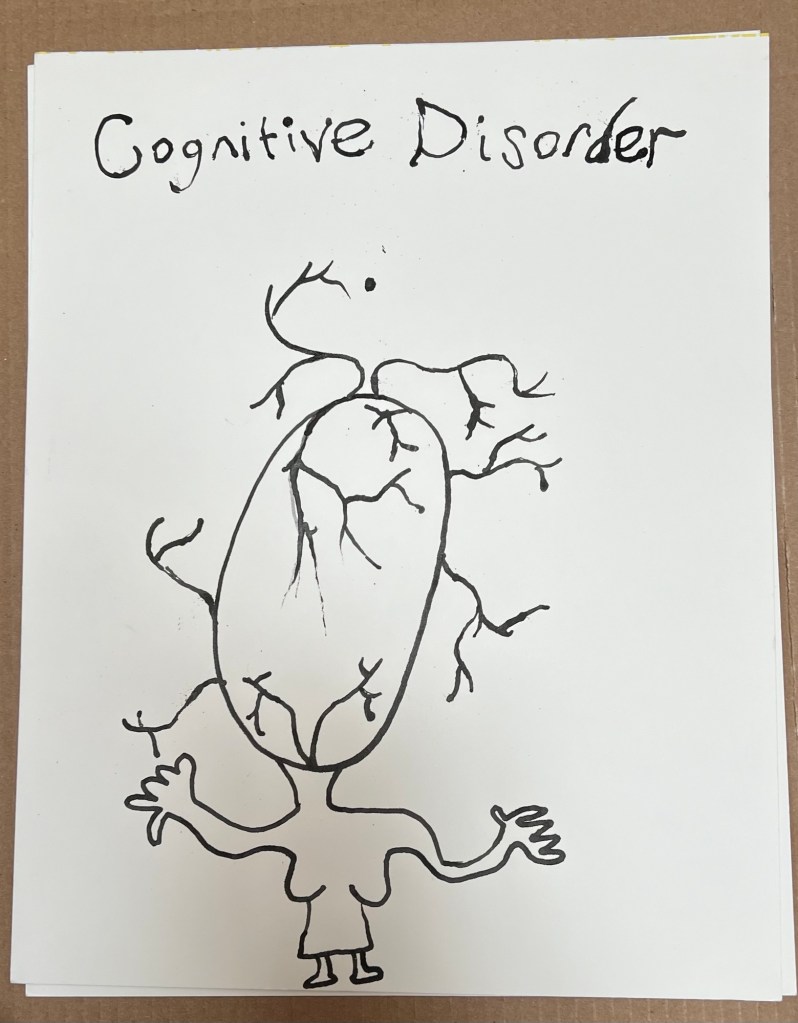
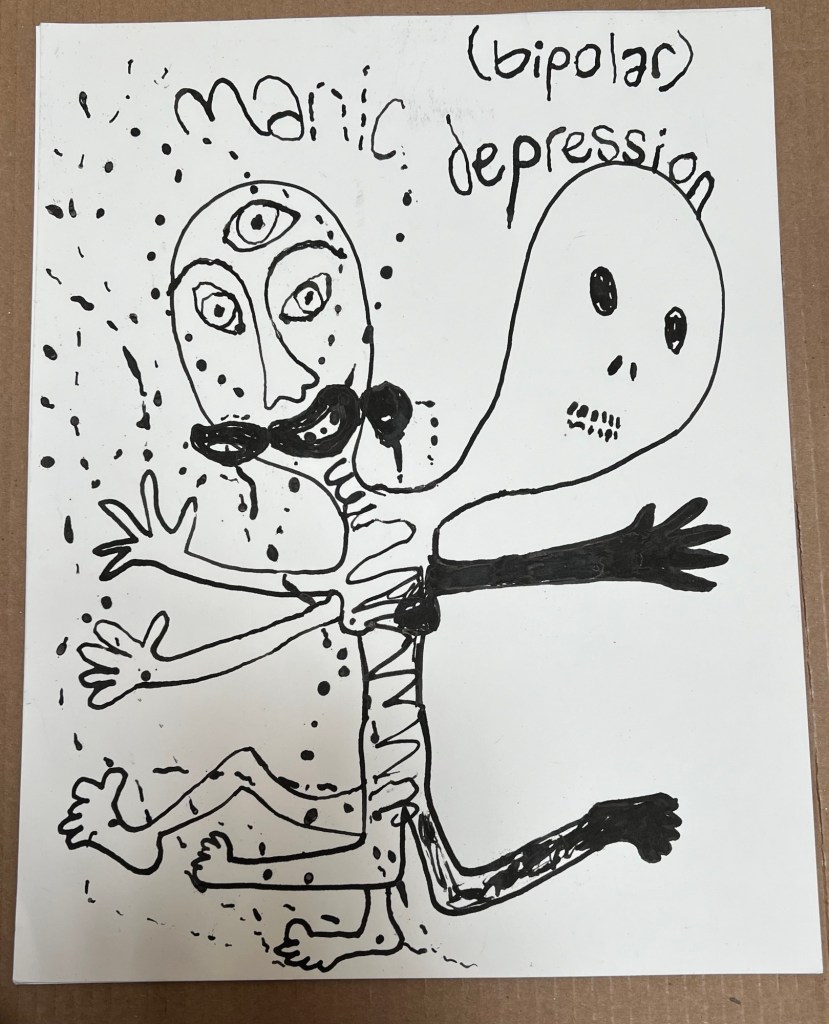
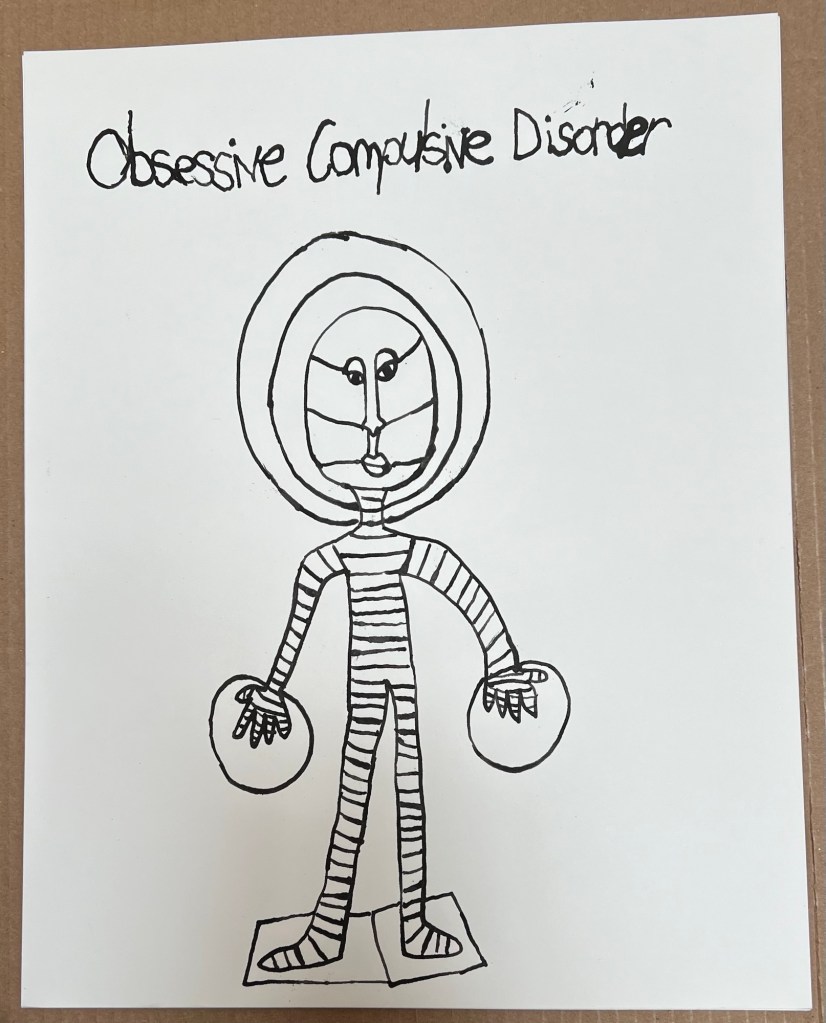
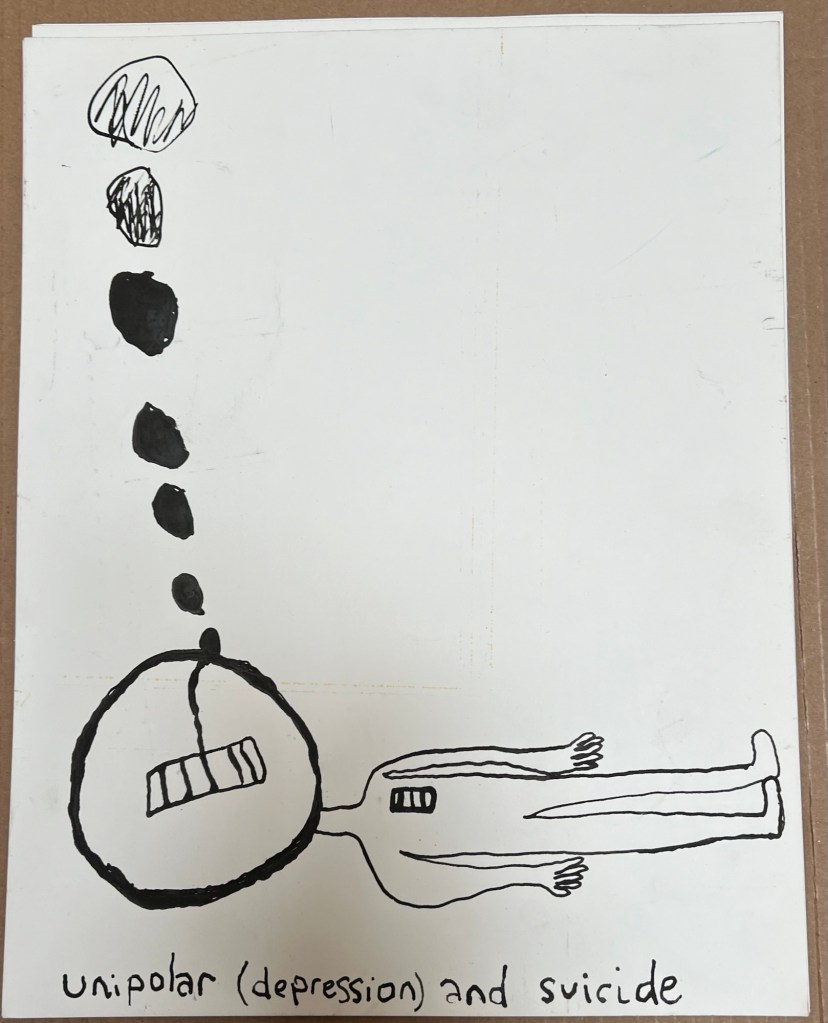
In one of grad school classes I made some cool illustrations of different diagnoses.
Before packing I took photos:
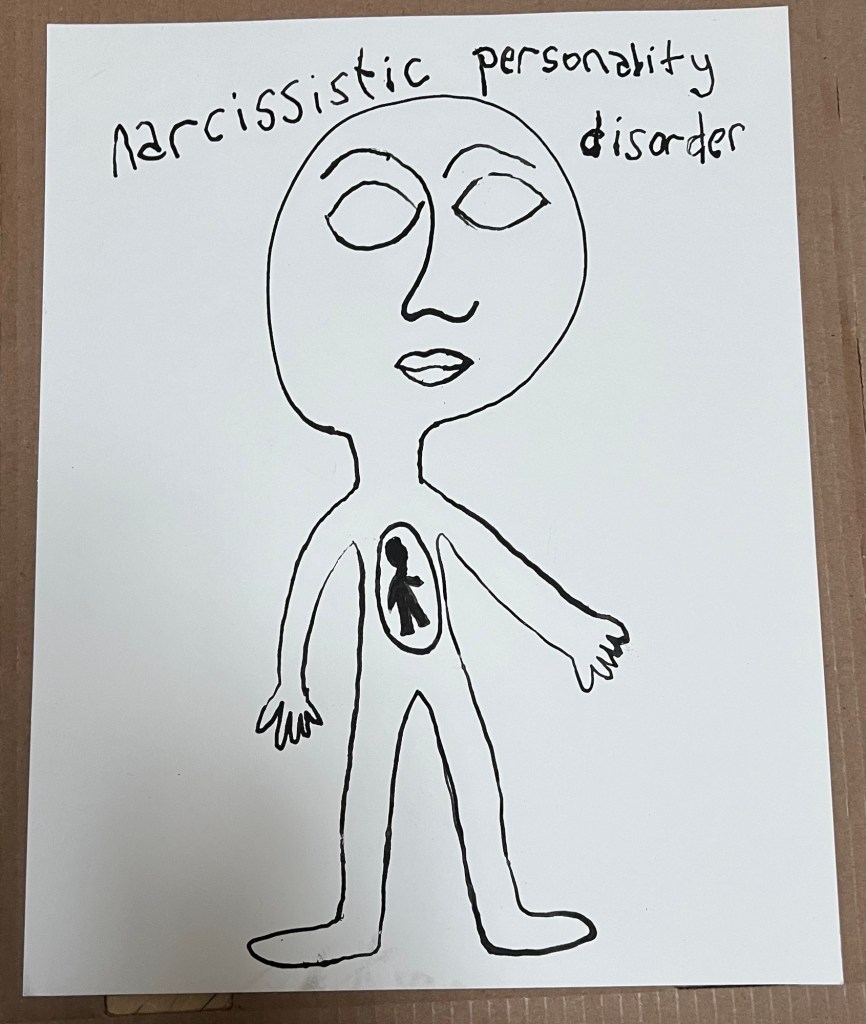
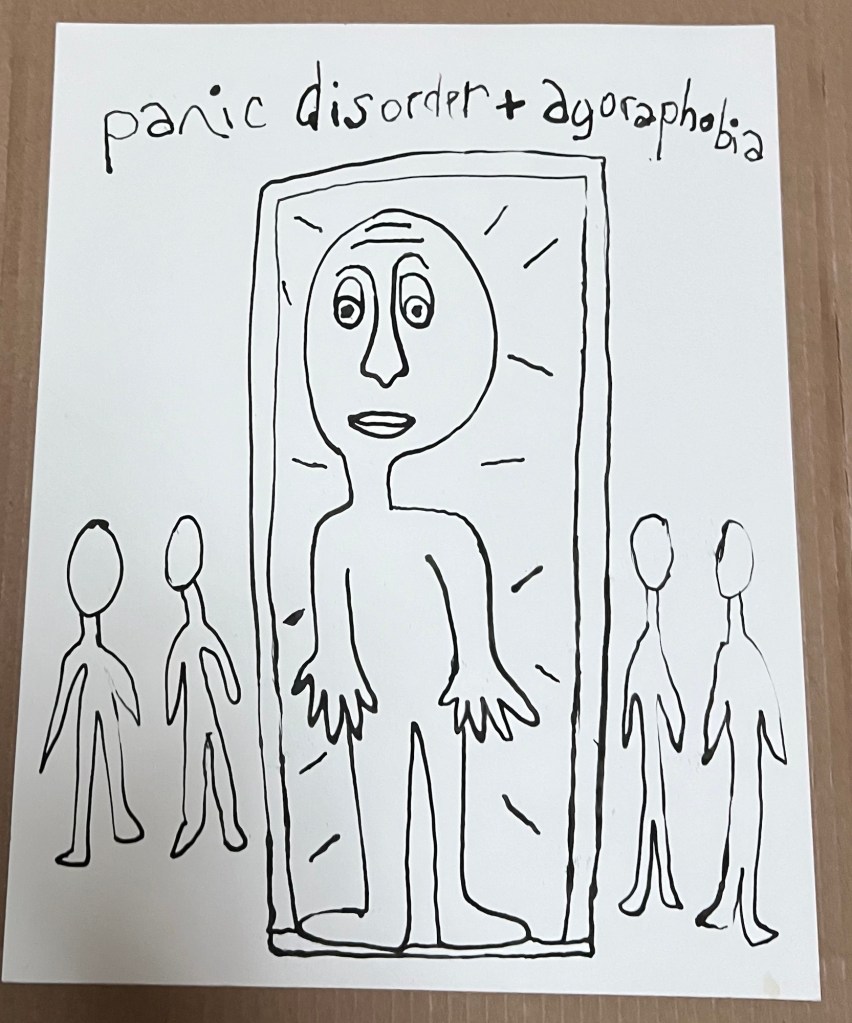
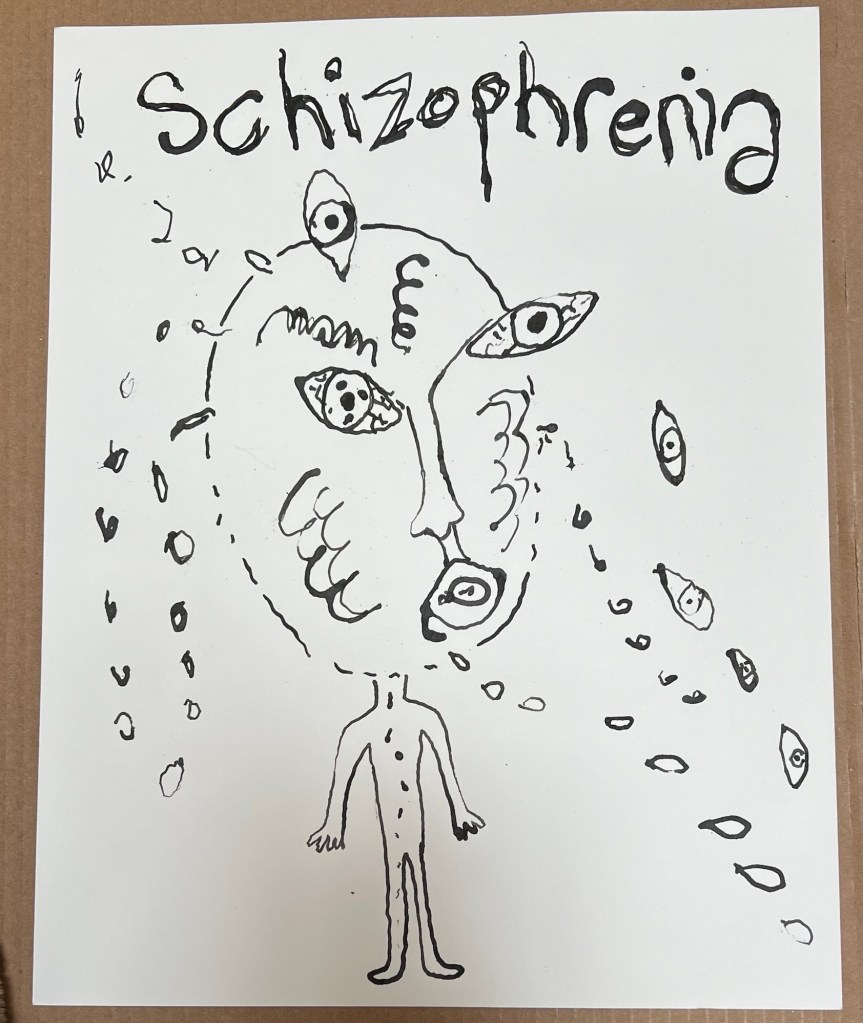
I just wrote a blog post so pathetic I just couldn’t publish it. I’m in the car on the way home in a rental I can’t drive because I failed the road test 2x since the pandemic, my permit has even expired.
The best line I wrote in it was. “I know the Art of Failure. I have a suitcase so full of tiny violins I have to sit on it and smash some of them and still can’t completely close the suitcase because I broke it trying. Much of this metaphor I just now embellished.
Harvard reunion and the Red Book. My 35th is coming up. Do I want to attend? I don’t know. 60 percent no and maybe 60 percent less out of 120%.
Should I write something in the Red Book or be like the famous people who don’t want their addresses or emails next to their names. Their name is enough. I’m not on the list of people who have died since 1990. Should I start my entry with that sentence? The last entry I did was a great piece of writing about my Class of ‘92 friend’s suicide, where I might have even outed myself as mentally ill.
I could also submit a semi-colon. There is a Project Semi-colon about suicide and mental health illness awareness.
“The tattoo is a way of saying that the wearer’s life is like a sentence, and they chose to continue on instead of ending it.”
I could write 35 semi colons for each year of my life. Maybe a poetic use of punctuation. They said submit anything:
“Please share your updates in the form that feels right to you: narrative, bullet points, a poem, lines of code . . . anything goes! If you’d like some inspiration, submissions often include:
• Career experiences and learnings
• Life lessons from family, friends, and others since leaving Harvard
• Goals for the years ahead”.
It would look like this
;;;;;;;;;;;;;;;;;;;;;;;;;;;;;;;;;;;
It’s kind of eloquent and challenging for people to know about mental ill ness up close in their lives. I could write “Still here: and then the semicolons. Or just go with the simplicity of the symbolism.
FYI I’m in a car o no a long car ride; hence the abundance of random long winded posts.
My Dad was right about his watches. Here’s Chat GPTs answer to the choice of live gifts vs. inheritance:
Yes, giving someone a Rolex (or any valuable asset) while you’re alive can potentially save money compared to leaving it as part of an inheritance. Here’s why:1. Avoid Estate Taxes: When you give gifts while you’re alive, especially if the value is below the annual gift tax exclusion (which is $17,000 per person as of 2023 in the U.S.), you can avoid estate taxes. Large estates may be subject to hefty taxes upon death, but gifting assets like a Rolex while alive could reduce the overall value of your estate and therefore lower estate tax exposure. 2. Appreciation in Value: If a Rolex appreciates in value over time, giving it now rather than later might help avoid potential capital gains taxes. The recipient may benefit from receiving it at its current value rather than inheriting an even more valuable asset down the road. 3. Gift Enjoyment: Another side of Girl Math—by gifting something like a Rolex now, the person gets to enjoy it while you’re alive, and you experience the joy of giving. Plus, you avoid the complexity of managing its transfer after death.
Of course, if the gift exceeds the annual exclusion, you might have to report it, but it still could result in long-term savings depending on the size of your estate.
From what AI said I thought how if you’re super wealthy, this year you can give out annual gifts of 18000 per individual and your spouse can as well if you want. Imagine you do that with 3 relatives, you’ve given out $108,000 of your money with no taxes, or twice that much if a couple does it. If you waited I don’t know what the tax would be. I don’t have that kind of money lying around but the point of all this, is that, through my adhd hyper focus on Girl Math, I’ve realized how fucking smart it can be on a very high level. I own a watch that should never be taken to a pawn shop,but if necessary, Sotheby’s, although you’d have to pay taxes on the sale.
Money is fascinating when you don’t have a college economics exam coming up, and you use the topic creatively to distract yourself from the complicated upcoming studio move I’m avoiding…
The Girl Math on new Bose headphones is coming soon, I hope before I’ve returned a set to Amazon and received the other set I ordered. For starters, they’re not black or silver, they’re moonstone blue:
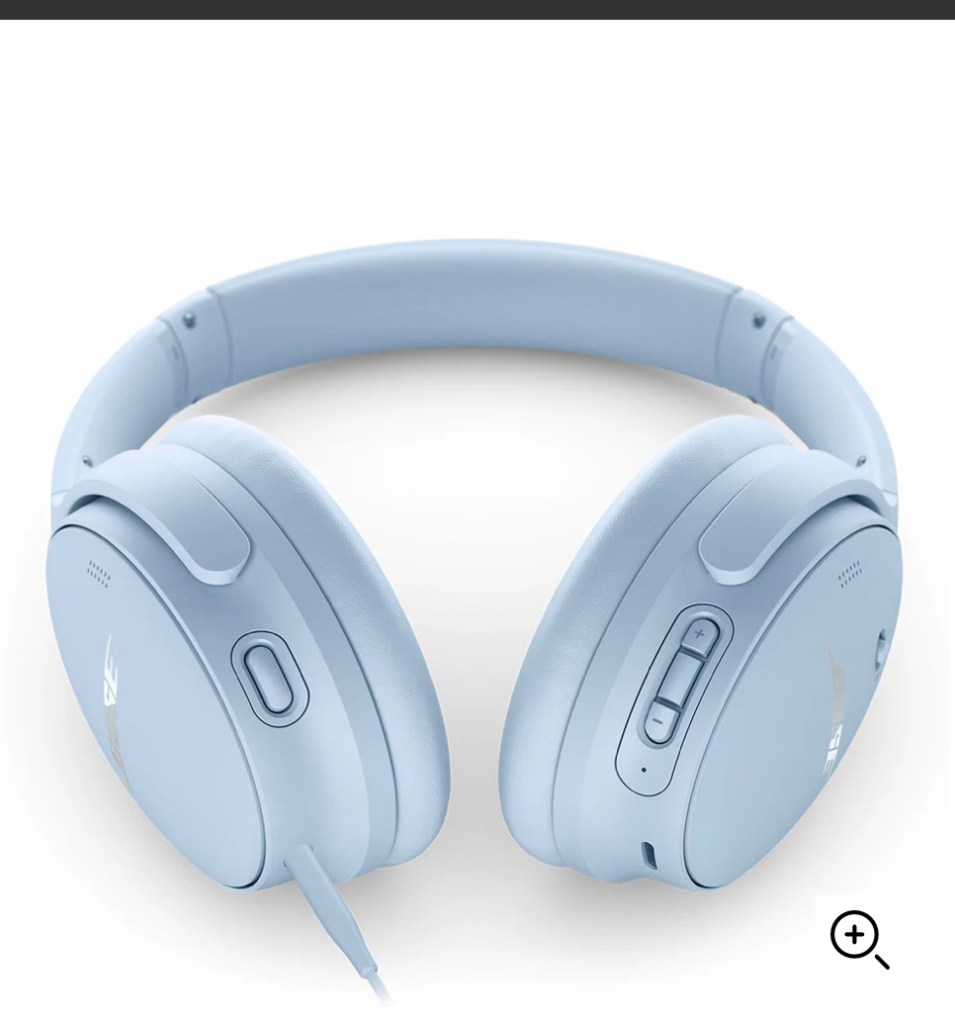
This is the first part of real Girl Math, for people to deal with spending not 18000 but between $200-300, making the agony fun.
In 2018, for my 50th birthday, I was given a pair of Bose headphones from two family members, as they cost a lot more back then. In fact, I didn’t pay for them. For some reason, they were purchased around my 51st birthday, one year later, as I had refused a big 50th birthday party that my dad had offered me numerous times.
Thus, my dad probably saved between $1,000 and $3,000 on my 50th birthday—likely around $1,000—by not having the party. You could go back to February 2018 and look for venues in NYC, as well as other expenses like the number of guests, cake, etc. If we’d had the party and an older person died beforehand, he would make money off that person’s place if it were priced that way. That’s an example of Girl Math.
Given that most people seem to have a hard time even using the word “died,” for fun, I could Girl Math my own funeral. Actually, no joke, I know someone who looks up the average number of years he has left (being around 93) and is Girl Mathing the hell out of his estate. He’s giving max untaxed money gifts to his kids and grandkids, saving a ton on estate taxes and probably capital gains taxes, too.y
My own dad did some sneaky but totally legal Girl Math about ten years ago. He offered each of his kids one of his very fancy watches. My sister picked a Rolex. I am the proud owner of a seriously beautiful Omega watch with a gold wristband. It doesn’t look like a “man’s” watch, and he even paid to have the wristband adjusted to fit me. Who knows what those watches might have cost his estate? I could find out; maybe I got it wrong, and he saved nothing but got the high value of giving me something while he’s still alive.
Gifts have extreme value, as they involve the joys of the moment of giving and receiving, and then thinking of the person—alive or dead—and feeling joy and nostalgia. Okay, this is a post in itself.
Basically, planning out your estate is obviously important. Whether you have valuables or money, it’s complicated. Wealthy people can afford to pay experts for their eventual demises. For me, my death, despite my having some assets, would cost money, whether hired or not. Free labor isn’t free—it’s time, and you only have a certain, unknown quantity until you also die.
On a tangent, at a party in SoHo many years ago, while ostensibly flirting with a very specific human very special to me (after about 25 years), I argued the point that just because other people die, there is a chance that I, for example, will not die since I haven’t died yet. I wasn’t even drunk during that discussion. I didn’t know about the “Would you rather be invisible or fly?” thought experiment, so I posited one I’d always wondered about: If your uncle died healthy and put it in his will that he wanted to be cooked, served, and eaten in lieu of the usual rituals, would you honor his wishes and eat him?
It turned out there had been a conversation among the members of a band about whom to eat first in a lost, starving, no-food situation. In that case, it pays to be small, as you wouldn’t be worth eating first. That’s why the witch had to waste time feeding Hansel before trying to cook him.
Obviously, spending time going through someone’s art journals is valuable. If I died, given my ADHD, there would be so much arduous and annoying work to do going through my stuff. I don’t have a will, which is embarrassing, but, given the law, my one kid would get everything, so I save on a lawyer. I am about to move out of my studio and put things in storage, which I’ve started, and it’s highly stressful. I would advise taking money out of my bank
“Girl Math”😀😉🫶🏼🤩
Girl Math: TheWholistic Approach to Doing the Real Math on Purchases with Logic and Math:
I first stumbled across “Girl Math” randomly—someone showed me this funny TikTok. It turned out to be from a podcast based in New Zealand that also posts on TikTok; part of their being the best Girl Mathers out there is the whole team: one person who talks with the other 2 guys and 2 Female producers who participate in their girl math TikToks. To get their flavor, I recently saw them guess a caller’s grandmother’s name within certain rules.
The Girl Math concept seems simple: someone calls in to talk about a purchase they’ve made (or are thinking of making), and the hosts help break down the cost and value. It’s not just, “Oh, you deserve it, just buy it!” Instead, they ask questions like: “How much did this cost? What occasion will you wear it to?” Sometimes, they even factor in lending it to friends or selling it later. By the end, they’ve managed to calculate that the person could actually be making money off the purchase in terms of its long-term value or resale potential.
It’s a bit of creative accounting, sure, but it’s grounded in logic, like looking at what other items cost in comparison or how much use you’ll get from it. It’s similar to when I go to Barnes & Noble for the $5 book of the month. If the book costs $15 and I only pay $5, I’ve already “saved” $10. And if I consider the subway fare I’ve avoided by staying in to read, that’s another $3. Boom—I’ve just made $13 by buying that book! You can even break it down by page count and get the cost per page if you’re really into the details.
One time the show which is also a podcast, had an economist who was actually impressed by the thought process. He said something about how the item could be seen as “appreciating” in value, especially if you sell it later. So, in a way, Girl Math is not as ridiculous as it sounds—it’s about maximizing value.
The term, “girl”, as an adjective, has been reappropriated to have a double entendre, embellishing the definition to mean you think girl means weaker or lesser like girl pushups, which are actually modified pushups. The twist obviously is that doing something the “girl” way is actually clever, creative and wholistic. Girl Math takes in the value of an object with a context of economics involving all real world facts, not simply a price tag. Next post I will do the real girl math on an item I “need”, which in girl math translates to, if we only bought what we need, all coffee shops, most clothing stores, restaurants, companies like Apple and Amazon would be out of business. And therefore, when you look at most purchases, including ones at the grocery store, are “extra” on different levels.
Girl Math focuses on purchases that tend to be “guilty pleasures.” Meaning in many cases, you might not tell certain people you purchased the item.
Check out my next post!
Got ideas for making videos around the studio like one I made a long time ago I should find
Here’s one from when I got to this building first studio

 6 Impossible Things For Breakfast